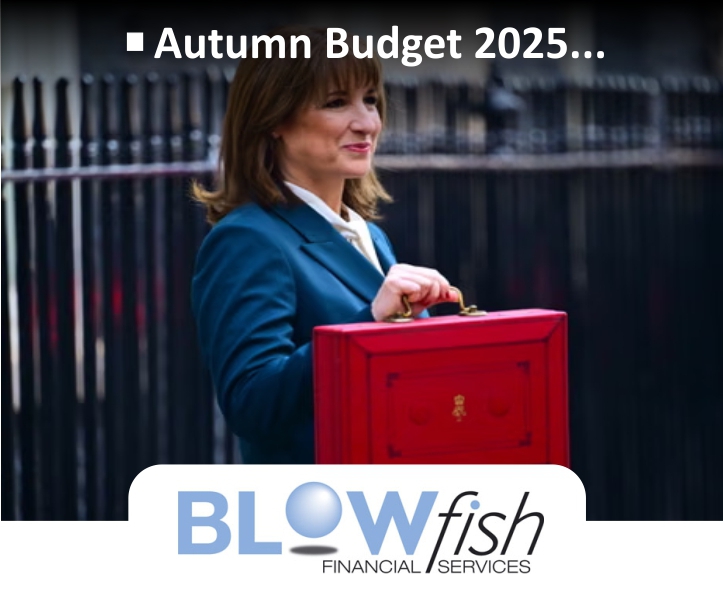
Chancellor of the Exchequer Rachel Reeves delivered her second Budget on 26 November, declaring “We are rebuilding our economy.” The fiscal update includes a series of new tax and spending measures – some of which had been announced or trailed prior to Budget day – described as “the right choices for a fairer, a stronger and a more secure Britain.” In total, the Budget will raise £26bn in taxes by 2029/30.
Economic forecasts
Ms Reeves began her statement by acknowledging the Office for Budget Responsibility’s (OBR’s) technical error in releasing its Economic and Fiscal Outlook earlier than planned. The document’s accidental release effectively detailed the Budget’s key contents before the Chancellor stood at the dispatch box to deliver her statement, a move Ms Reeves described as “deeply disappointing.”
The Chancellor then confirmed that the Budget will see an expansion of the buffer for meeting the government’s fiscal
targets, with the amount of headroom more than doubling from last year’s figure of £9.9bn to £21.7bn. During her
speech, Ms Reeves also noted that the Budget kept “every single one” of Labour’s manifesto pledges on tax, with both
her fiscal rules maintained without the need for “austerity” or “reckless borrowing.”
While the Chancellor noted that the OBR’s economic growth forecast for this year had been increased from 1.0% to 1.5%,
growth is expected to be 1.4% in 2026, and 1.5% across each of the following four years. In terms of consumer prices, the Chancellor noted that OBR calculations show “inflation is coming down faster” and, “as a direct result of this Budget,” will be “a full 0.4 percentage points lower next year.” The OBR predict CPI inflation of 3.5% this year and 2.5% in 2026.
Personal taxation, savings, wages and pensions
• The government is maintaining the Income Tax Personal Allowance at £12,570 and higher rate threshold at £50,270, for an additional three years to April 2031. National Insurance thresholds are also frozen until 2031
• The starting rate of Income Tax for savings will be retained at £5,000 for 2026/27 and will stay at this level until 5 April 2031. The tax rate on savings income will increase by two percentage points across all bands from April 2027 but current £1,000/£500 Personal Savings Allowances continue
• Separate rates of Income Tax will apply for property income. From April 2027, the property basic rate will be 22%, the property higher rate will be 42% and the property additional rate will be 47%
• Inheritance Tax thresholds (IHT) – The IHT nil-rate bands are already set at current levels until April 2030 and will stay fixed at these levels for a further year until April 2031. The forthcoming combined allowance for the 100% rate of agricultural property relief and business property relief will also be fixed at £1m for a further year until 5 April 2031. This will be legislated for in Finance Bill 2025/26 and take effect from 6 April 2030
• The ordinary and upper rates of tax on dividend income will increase by two percentage points from April 2026. There is no change to the dividend additional rate or the £500 annual (non-ISA) Dividend Allowance
• A High Value Council Tax Surcharge on owners of residential property in England worth £2m or more will
start in 2028/29, with local authorities collecting revenue on behalf of central government. The charge will start at £2,500 a year and rise to £7,500 for properties valued above £5m
• From 6 April 2027 the annual Individual Savings Account (ISA) cash limit will be reduced from £20,000 to £12,000. Annual subscription limits will remain at £20,000 for ISAs until 2031, meaning you can invest the full amount in a Stocks & Shares ISA, or you can invest £12,000 in a Cash ISA, plus £8,000 in a Stocks & Shares ISA. Savers over the age of 65 will be able to save up to £20,000 in a cash ISA each year.
• Annual subscription limits remain at £4,000 for Lifetime ISAs and £9,000 for Junior ISAs and Child Trust Funds until 5 April 2031
• To reform the Lifetime ISA, the government will publish a consultation in early 2026 on the implementation of a new, simpler ISA product to support first time buyers to buy a home. Once available, this new product will be offered in place of the Lifetime ISA
• The Help to Save scheme is to be made permanent
• The Venture Capital Trust (VCT) and Enterprise Investment Scheme (EIS) investment limits are increasing
to £10m and £20m for Knowledge Intensive Companies (KICs) and the lifetime company investment limit is increasing to £24m and £40m for KICs. The VCT Income Tax relief will decrease to 20%. These changes will be
legislated in Finance Bill 2025/26.
• As recently announced, the government will increase the National Living Wage by 4.1% for individuals to £12.71 an hour. The National Minimum Wage for 18 to 20-year-olds will also increase by 8.5% to £10.85 per hour and for 16 to 17-year-olds and apprentices by 6.0% to £8.00 per hour
• Working age benefits will be uprated in line with the September CPI inflation of 3.8% from April 2026
• As previously announced, the government has committed to maintain the State Pension Triple Lock for the duration of this Parliament, meaning that the basic and new State Pensions will increase by 4.8% in April 2026, in line with earnings growth. This means £241.30 a week for the full, new flat-rate State Pension (for those who reached State Pension age after April 2016) and £184.90 a week for the full, old basic State Pension (for those who reached State Pension age before April 2016)
• There are to be changes to salary sacrifice arrangements for pension contributions, with the amount that can be sacrificed without paying NICs capped at £2,000 per employee from 2029
• Members of the Pension Protection Fund (PPF) and Financial Assistance Scheme (FAS) will be protected
against the impact of inflation by introducing CPI-linked increases, capped at 2.5% a year, on pre-1997 pension
accruals where their original schemes provided this benefit, from January 2027.
Business measures
In her speech, Ms Reeves said, “We are sending a simple message
to the world: If you build here, Britain will back you,” before
making the following announcements:
• A new UK Listing Relief will provide a three-year exemption
from Stamp Duty Reserve Tax for companies listing in the UK
• Visa reforms to help UK businesses access global talent
• The British Business Bank’s (BBB’s) new five-year plan will
invest at least £5bn in growth-stage funds and scale-up
companies. The BBB will launch VentureLink to help pension
funds invest in venture capital
• Company eligibility limits for the Enterprise Management
Incentives scheme will rise, giving more scale-ups the chance
to join tax-advantaged share schemes
• Business rates in England to be updated from April 2026,
including permanently lower multipliers for retail, hospitality
and leisure
• The government has published a Call for Evidence (to close
on 28 Feb 2026) seeking views on how the UK can provide
better support to entrepreneurs
• More than £1.5bn invested through the Youth Guarantee
and Growth and Skills Levy to strengthen the pipeline of
skilled labour, including fully funded SME apprenticeships
for under-25s.
Housing and infrastructure
Announcements included:
• £1.3bn from the National Housing Delivery Fund devolved to
major combined authorities to unlock housing, regenerate
sites and support local growth
• Planning reforms, including changes to the National
Planning Policy Framework (NPPF), alongside skills reform
and pensions reform expected to unlock £50bn for business
and infrastructure
• New infrastructure projects including £891m for the Lower
Thames Crossing.
Education and the NHS
Ms Reeves then turned her attention to education, noting,
“this is a government on the side of our kids, who will back their
potential.” Pledges include:
• Free breakfast clubs expanded, with 2,000 additional
schools joining the scheme in 2026/27
• £18m over two years to renew up to 200 playgrounds
across England
• £5m for libraries in secondary schools, building on the £10m
committed for primary school libraries earlier this year.
Ms Reeves also announced 250 new Neighbourhood Health
Centres delivered through public investment and a new
public-private partnership model, as well as £300m in digital
technology upgrades to improve NHS productivity and
enhance patient outcomes.
Other key points
• Removal of the two-child limit in Universal Credit (UC)
Child Element – from April 2026
• Changes to taxation of electric vehicles – including a new
Electric Vehicle Excise Duty (eVED) of 3p per mile for electric
cars and 1.5p per mile for plug-in hybrid cars, with effect
from April 2028
• Tobacco Duty rates – to increase by RPI inflation +two
percentage points from 6pm on Budget day
• Alcohol Duty rates – will increase in line with RPI inflation
from 1 Feb 2026
• Remote Gaming Duty – will increase from 21% to 40% from
April 2026 and a new Remote Betting Rate at 25% within
General Betting Duty will be introduced from April 2027
• Student Loans – the Plan 2 repayment threshold will be
frozen for three years from April 2027
• Air Passenger Duty (APD) rates – uprated in line with RPI
from 1 April 2027
• Devolved government funding – Scottish government
to receive £820m, the Welsh government £505m and the
Northern Ireland Executive £370m
• Defence spending – the UK to spend 2.6% of GDP on
defence in 2027
• Rail fares freeze – applicable to all regulated rail fares
in England for one year starting from March 2026
(announced previously)
• Energy prices – a package of measures to reduce average
household energy bills by £150 across Great Britain from
April 2026
• Prescription costs – NHS prescription in England frozen
at £9.90.
Closing comments
Rachel Reeves signed off her Budget saying, “In the face of
challenges on our productivity, I will grow our economy through
stability, investment and reform. I’ve met my fiscal rules and built
our economic resilience for the future. I have asked everyone to
contribute… for the security of our country and the brightness
of its future, but I have kept that contribution as low as possible by
reforming our tax system… making it fairer and stronger for
the future.”
The value of investments can go down as well as up and you may not get back the full amount you invested. The past is not a guide to future performance and past performance may not necessarily be repeated.
Our service is driven by our fantastic team. Here you will find all our staff - we think it's important for our clients to build close relationships with us...
Send us a message - Please use the form below to contact us, we will reply as soon as we can. Alternatively you can call us on Tel. (+44) 0115 972 7666.

 Economic forecasts
 Personal taxation, savings, wages and pensions
 Other key points